
Balazs Feher
Assistant Professor of Oral and Maxillofacial Surgery


Harvard School of Dental Medicine’s Artificial Intelligence in Dental Medicine continuing education program teaches dental and health care professionals how to evaluate AI tools, recognize their limitations, and use them responsibly in dental practice, research, and education.
Choose the 10-week live online program, the two-day, hands-on immersion at Harvard School of Dental Medicine in Boston, or both.
| Enrollment option | Format/duration | Dates and location |
|---|---|---|
Complete hybrid program | Ten weeks of live online instruction and a two-day, hands-on immersion. Build a foundation in AI and apply what you learn in person. | February 3–April 14, 2027 and May 13–14, 2027 · Online and at Harvard School of Dental Medicine, Boston, respectively |
Live virtual learning | Ten weeks of faculty-led instruction, clinical case studies, and interactive discussions. | February 3–April 14, 2027• 9–11 a.m. ET; live on Zoom, See the session schedule |
Hands-on immersion | Two-day hands of applied AI learning, technology demonstartions, and innovation labs | May 13–14, 2027 · REB Auditorium, Harvard School of Dental Medicine, Boston See the session schedule |
Explore how artificial intelligence can support dental diagnostics, treatment planning, clinical decision-making, research, and practice management. In the live online program, faculty from multiple disciplines guide participants through clinical case studies and discussions about where AI tools can help and what their limitations are. During the in-person immersion, participants explore AI technologies through demonstrations and hands-on innovation labs.
By the end of the program, participants will be able to:
Early-bird tuition is available through December 31, 2026. Registration closes February 1, 2027.
| Registration category | Complete hybrid program* | Live online program | Hands-on immersion |
|---|---|---|---|
Standard (early bird) | $4,500 | $3,000 | $2,000 |
Standard | $5,000 | $3,500 | $2,500 |
Early career (early bird) | $3,500 | $2,250 | $1,500 |
Early career | $4,000 | $2,750 | $1,750 |
Student or resident (early bird) | $2,500 | $1,500 | $1,000 |
Student or resident | $3,000 | $1,750 | $1,250 |
* With the Complete Hybrid Program, standard registrants save $500 at the early-bird rate or $1,000 at the regular rate compared with enrolling in both components separately.
Certificates of Completion will be awarded for the Live Virtual and the Hands-on Immersion programs.
Preferred tuition is available for all three enrollment options. The student and resident rate is available to individuals currently enrolled in a qualifying degree, residency, or fellowship program. The early-career rate is available to professionals within five years of completing a qualifying professional or terminal academic degree.
Eligibility documentation is required and may include a graduation date or degree verification. Preferred tuition cannot be combined with other discounts or promotional offers.
For in-person programs, your refund depends on when Harvard School of Dental Medicine receives your cancellation request.
The cancellation and refund policy applies separately to each program component, based on its start date.
Live Virtual Learning (starts February 3, 2027). The online program policy applies.
Hands-On Immersion (starts May 13, 2027). The in-person program policy applies.
Review the cancellation and refund policies.
| When we receive your request | Refund |
|---|---|
61 or more days before the program starts | Tuition paid, less a 10% administrative fee |
31–60 days before the program starts | 50% of tuition paid |
30 days or fewer before the program starts | No refund |
Email cancellation requests to hsdm_ce@hsdm.harvard.edu.

This is an extremely innovative program that brings together experts from multiple disciplines and prepares clinicians for the future of AI-augmented medicine.

"[The most valuable part of this program was] to understand where we are at with AI and research plus the clinical side of AI. To get the chance to listen to true frontiers in the field was amazing and such an inspiration."
The program includes 10 weeks of live online instruction and a two-day, hands-on immersion in Boston. Select an option below to see its schedule.
Session recordings. Participants automatically get access to a recording of each live online session through the learning portal.
Technology requirements. Participants in the live virtual or hybrid program are responsible for having the internet access, equipment, software, and system access needed to participate. Some Harvard systems and learning platforms may have additional terms of use.
Join faculty on Zoom for clinical case studies and interactive discussions about artificial intelligence in dental medicine. Sessions run from 9 to 11 a.m. ET. The first live session is Thursday, February 11, 2027. The remaining sessions are on Wednesdays. Recordings may be available if you miss a live session.
| Date | Topic | Session | Faculty |
|---|---|---|---|
February 3 | Program orientation | Welcome and Program Orientation | Balazs Feher |
February 11 | The AI landscape | The Future of AI in Dental Medicine Opportunities and Challenges for AI in Dentistry | William Giannobile Balazs Feher and |
February 17 | AI foundations | Core Concepts, Methods, and Applications | Magda Feres and Balazs Feher |
February 24 | AI for diagnosis and clinical planning | Diagnostic AI: Computer Vision and Natural Language Processing AI-Assisted Diagnostics and Documentation | Balazs Feher Christopher Balaban |
March 3 | AI for clinical planning | AI-Assisted Orthodontic Treatment Planning AI-Assisted Dental Implant Planning | Alfred Griffin Balazs Feher |
March 10 | AI in dental research | Applied Computer Vision in Dental Research | Andreas Werdich |
March 17 | Prognostic AI | Prognostic and Causal AI: Methods and Clinical Applications | Balazs Feher |
March 24 | Predictive and personalized care | Predicting Patient Disease Trajectories Using AI From Outcome Prediction to Personalized Treatment | Flavia Teles Magda Feres |
March 31 | Generative AI | Generative AI and Foundation Models: Concepts and Applications | Balazs Feher |
April 7 | Generative AI in practice | Advanced Reasoning with Large Language Models in Medicine Foundation Models in Dental Medicine | Raj Manrai Shu Tu |
April 14 | Future perspectives | Emerging Opportunities and Challenges Translating AI Innovation into Dental Practice | Robert Faiella Robert Faiella, William Giannobile, |
May 13–14, 2027 | Harvard School of Dental Medicine, Boston
Spend two days exploring AI applications in dental medicine through technology demonstrations, hands-on activities, and innovation labs at the REB Auditorium, Harvard School of Dental Medicine, Boston.
Explore the practical applications of AI through two days of hands-on labs, clinical cases, technology demonstrations, and faculty-led discussion.
Participants will evaluate clinical and research applications, interact with AI technologies, compare AI-assisted approaches with conventional workflows, and consider strategies for responsible implementation.
During the immersion, you will:
A foundational overview supports participants attending the immersion without completing the virtual program.
Additional instructors will be announced soon.


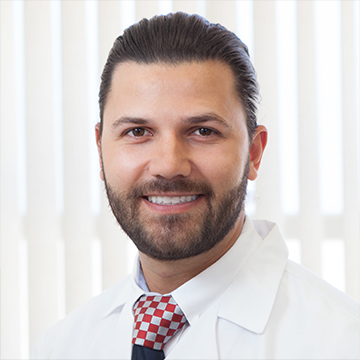
Dr. Christopher Balaban is a practicing dentist who has published on the use of artificial intelligence (AI) in dentistry. He holds a master’s degree in biomedical science and graduated summa cum laude from Boston University’s Henry M. Goldman School of Dental Medicine, where he served as a clinical instructor in the Department of General Dentistry. He is a member of Omicron Kappa Upsilon, the national dental honor society, and a fellow of the American College of Dentists.
Balaban’s articles on dental AI have appeared in Compendium and The Journal of the American Dental Association, among other publications. He also led the writing of the “Clinical Use of Dental AI” section of the American Dental Association’s white paper on augmented intelligence.
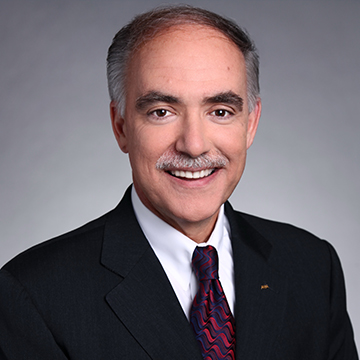
Dr. Robert Faiella chairs the Harvard School of Dental Medicine Board of Fellows and is a past president of the American Dental Association and the Massachusetts Dental Society. He serves as a director and vice president of the American Board of Periodontology and as a regent and treasurer of the American College of Dentists. He is also a member of the MIT Sloan School of Management Alumni Board.
Faiella earned two bachelor’s degrees from Villanova University and a DMD from Fairleigh Dickinson University School of Dental Medicine. He completed graduate training in periodontology at Harvard School of Dental Medicine as a National Institutes of Health postdoctoral fellow and earned an MMSc from Harvard Medical School. He spent five years as a research fellow in the Department of Orthopaedic Surgery at Massachusetts General Hospital and earned an MBA from the MIT Sloan School of Management.
Faiella is a diplomate of the American Board of Periodontology and a fellow of the American College of Dentists, the International College of Dentists, the Pierre Fauchard Academy, the American Academy of Dental Science, the Academy of Osseointegration, and the International Team for Implantology. He received the Distinguished Alumnus Award from Harvard School of Dental Medicine and has been invited to deliver commencement addresses at eight dental schools.

Dr. Flavia Teles is a professor in the Department of Basic and Translational Sciences at the University of Pennsylvania School of Dental Medicine. Her work focuses on clinical and translational periodontal research, with an emphasis on the oral microbiome and biomarkers of periodontal disease progression. As a professor and core member of the Center for Innovation and Precision Dentistry (CiPD), she is advancing efforts to identify markers of disease initiation and progression and to develop AI-driven tools for personalized periodontal care through the integration of microbiology, immunology, and informatics.
She leads a research program dedicated to understanding how the oral microbiome influences periodontal health and treatment outcomes. Her work has been supported by NIH/NIDCR, foundations, and industry partners for more than a decade.
In addition to her research activities, Teles contributes to the field through several national and international leadership roles. She serves as an associate editor for the Journal of Clinical Periodontology, is a member of the editorial board for the Journal of Periodontology, and participates in the American Academy of Periodontology’s Diagnostic Technologies and Precision Medicine Workgroup and its Task Force on Design and Analysis in Oral Health Research.
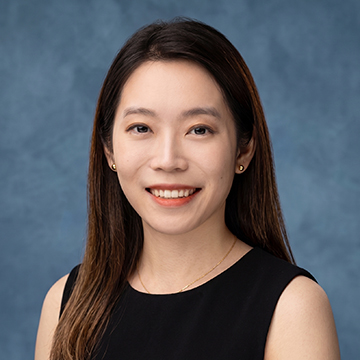
Dr. Shu Tu, DMD, MSc, is an Oxford-trained pharmacologist, clinician-scientist, and periodontology resident at Harvard School of Dental Medicine. Her background spans molecular biology, bioinformatics, and clinical dentistry. Her research has appeared in Nature Communications and Science Advances.
Tu develops artificial intelligence (AI) systems that interpret multiple types of clinical data, with the goal of achieving performance comparable to that of dentists. She is particularly interested in designing efficient, open-weight AI models that can operate in settings with limited computing resources and expand access to AI tools in underserved communities.

Dr. Andreas Werdich is a physicist and leads the AI and Data Science team at the Core for Computational Biomedicine. He helps Harvard Medical School colleagues apply data science across medicine and biomedical engineering. His work uses deep learning and computer vision to study human health and disease in experimental and clinical data. He also continues to study cardiac electrophysiology and arrhythmias through collaborations with Harvard teaching hospitals. Werdich earned a diploma in atomic physics from Freiburg University in Germany and a PhD in physics from Vanderbilt University. For his dissertation, he used high-speed fluorescence imaging of single cells in microfluidic devices to investigate the molecular mechanisms of cardiac arrhythmias. He completed postdoctoral fellowships at Massachusetts General Hospital and Case Western Reserve University and joined the Harvard Medical School faculty at Brigham and Women’s Hospital in 2015.
Contact our team with questions.